
Roy Morgan Consumer Confidence Drop: What You Need To Know
Roy Morgan Consumer Confidence Drop: What It Means for Property Buyers in 2026
Roy Morgan Consumer Confidence Drop is becoming a critical signal for anyone watching the Australian property market closely. With sentiment hitting prolonged lows, buyers, investors, and homeowners are reassessing their strategies in response to interest rate pressures and economic uncertainty. Understanding what’s driving this shift is essential, especially as confidence levels often influence borrowing behavior, demand patterns, and ultimately property prices across key markets like Sydney and regional hubs.
Falling consumer confidence doesn’t just reflect economic fear—it directly impacts buyer demand, borrowing decisions, and property price momentum across Australia.
Understanding the Roy Morgan Consumer Confidence Drop
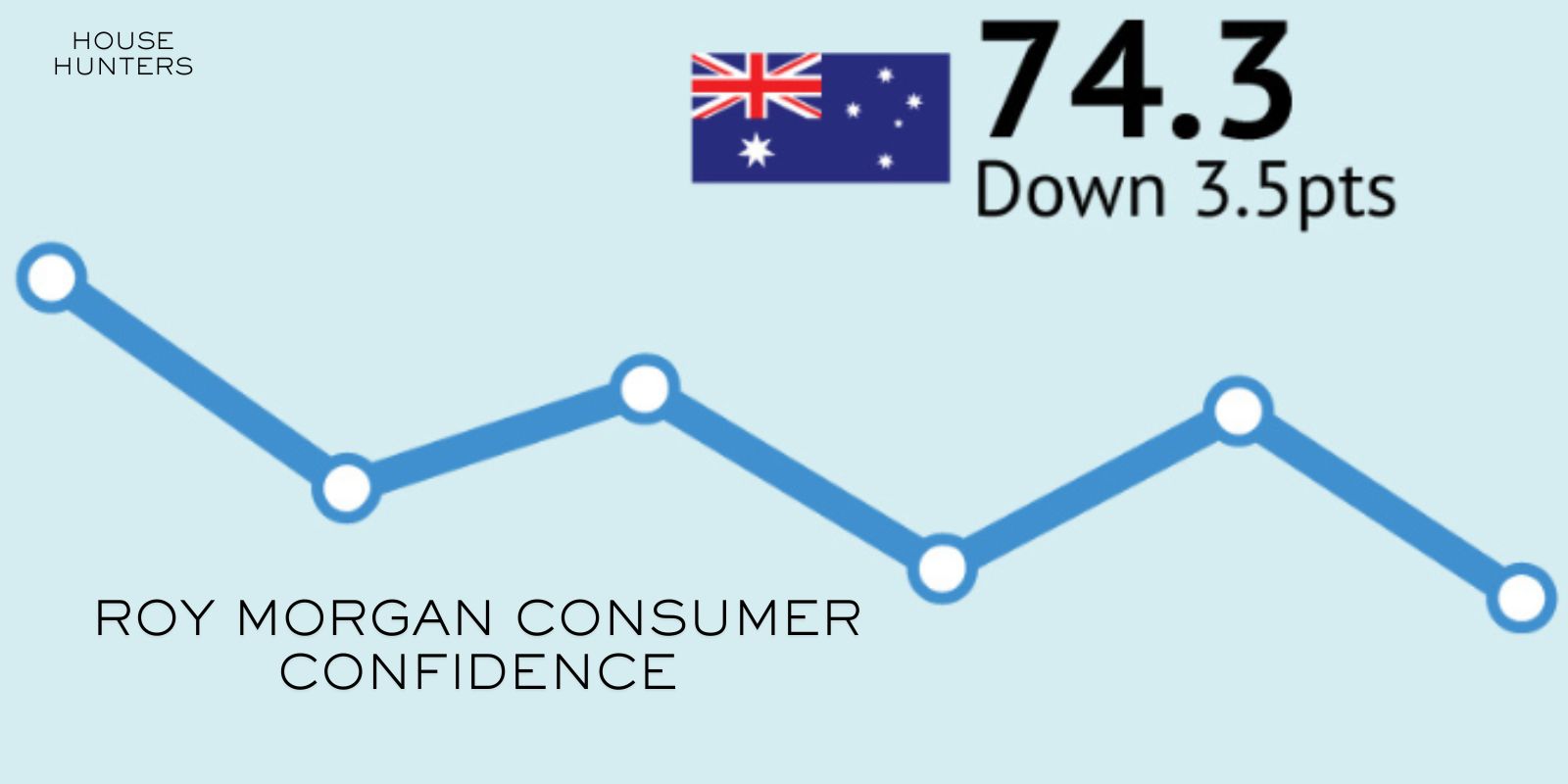
ANZ-Roy Morgan Consumer Confidence has dropped to its lowest level since mid-July 2023 after the RBA raised interest rates to the highest level in 12 years. This sharp decline reflects the immediate sensitivity of Australian households to monetary policy tightening, particularly as mortgage repayments and living costs rise simultaneously. Confidence metrics often act as a forward indicator, showing how households feel before their financial behaviour fully adjusts in the market.
ANZ-Roy Morgan Consumer Confidence has dropped to its lowest level since mid-July 2023 after the RBA raised interest rates to the highest level in 12 years, according to Roy Morgan’s latest consumer confidence report. This sharp decline reflects the immediate sensitivity of Australian households to monetary policy tightening, particularly as mortgage repayments and living costs rise simultaneously.
Consumer Confidence has spent a record 41 straight weeks below the mark of 85 and is now 6.5 points lower than the same week a year ago. Sustained periods below this threshold historically indicate cautious consumer behaviour, reduced discretionary spending, and slower housing activity. For property professionals, this extended weakness signals a shift from aggressive buying conditions toward a more selective, value-driven market environment.
State-by-State Consumer Sentiment Trends
Consumer Confidence was down in Sydney NSW, Victoria, Queensland, and South Australia, but slightly up in Western Australia, reversing the previous week’s trend. This divergence highlights how local economic conditions, employment stability, and resource-driven economies like WA can buffer sentiment declines. For investors, understanding these regional variations is crucial when identifying resilient property markets during broader national downturns.
While eastern states remain under pressure due to higher population density and mortgage exposure, Western Australia’s modest improvement suggests pockets of opportunity still exist. These regional differences reinforce the importance of hyper-local analysis rather than relying solely on national averages when making property investment decisions in uncertain economic cycles.
What’s Driving the Confidence Decline?
The decrease in Consumer Confidence is driven by a deterioration in people’s buying intentions after the interest rate rise and growing concerns about the long-term health of the Australian economy. As borrowing becomes more expensive, households naturally pull back from major financial commitments, including property purchases, renovations, and upgrades. This behavioural shift directly impacts transaction volumes and market liquidity.
The decrease in Consumer Confidence is driven by a deterioration in people’s buying intentions after the interest rate rise and growing concerns about the long-term health of the Australian economy, as also highlighted in
ANZ’s economic research on consumer confidence. As borrowing becomes more expensive, households naturally pull back from major financial commitments.
Only 7% of Australians expect “good times” for the Australian economy over the next twelve months, while 40% expect “bad times.” Net sentiment for the long-term economic outlook is at its lowest level since April 2020. This level of pessimism typically aligns with reduced risk appetite, meaning buyers delay decisions, negotiate harder, and prioritise financial security over growth opportunities.
Impact of Interest Rates on Buyer Behaviour
Interest rate increases have a compounding effect on consumer psychology, not just affordability. When rates rise rapidly, buyers often fear further increases, leading to hesitation even among those who can still borrow. This creates a temporary imbalance where supply may remain steady, but demand weakens, softening price growth or causing short-term corrections in certain markets.
For deeper insights into how economic forces influence pricing, explore impact of economic factors on Sydney property prices, which explains how macro trends translate into real estate movements.
What This Means for the Property Market
Lower consumer confidence typically leads to reduced competition among buyers, creating opportunities for strategic purchasers. When sentiment is low, fewer emotionally driven decisions occur, allowing well-prepared buyers to negotiate better terms and secure properties below peak valuations. This is often where experienced investors find the most value.
However, the flip side is slower market momentum. Sellers may need to adjust expectations, and properties could remain on the market longer. Understanding these dynamics is essential, especially when evaluating timing decisions in a transitioning market environment influenced heavily by economic sentiment indicators.
Buyer Strategy in a Low-Confidence Market
In a cautious market, successful buyers focus on fundamentals such as location quality, long-term growth drivers, and rental demand rather than short-term speculation. Properties in well-connected suburbs with strong infrastructure and lifestyle appeal tend to outperform even during periods of low confidence.
If you’re navigating this environment, working with professionals can provide clarity. Learn more about expert guidance here: Sydney buyers agent services, which help buyers identify opportunities others may overlook.
Key Market Signals to Watch
| Indicator | What It Means | Property Impact |
|---|---|---|
| Consumer Confidence Index | Measures household sentiment | Lower demand and cautious buying |
| Interest Rates | Cost of borrowing | Reduced borrowing capacity |
| Economic Outlook | Future expectations | Delayed purchasing decisions |
| Regional Variations | State-based performance | Uneven market opportunities |
Confidence vs Property Market Behaviour
| Confidence Level | Buyer Behaviour | Market Trend |
|---|---|---|
| High | Aggressive bidding | Price growth |
| Moderate | Balanced decisions | Stable prices |
| Low | Cautious and selective | Slower growth or corrections |
Expert Breakdown: Roy Morgan Data Explained
For a deeper understanding of how consumer confidence data is measured and interpreted, this video explains the economic indicators and their real-world implications for markets and consumers.
What Factors Affect Real Estate During Low Confidence?
Beyond sentiment, several structural factors continue to influence property prices, including supply constraints, population growth, and infrastructure investment. Even during confidence downturns, these fundamentals can support long-term property value, particularly in high-demand urban and lifestyle regions.
For a broader breakdown, explore what factors affect the price of real estate, which highlights how multiple forces interact within the housing market.

Reading Between the Lines: Opportunity in Uncertainty
Periods of low consumer confidence often create a disconnect between perceived risk and actual opportunity. While many buyers pause, experienced investors recognise that reduced competition can improve negotiation leverage and access to higher-quality assets. This shift transforms uncertainty into a strategic advantage for those prepared to act decisively.
In 2026, the key is not avoiding the market but understanding it deeply. Confidence levels will fluctuate, but property fundamentals remain driven by long-term demand, infrastructure, and population growth. Those who align their strategy with these fundamentals rather than short-term sentiment are typically the ones who outperform.
FAQs
What does a drop in consumer confidence indicate for property buyers?
A decline in confidence reflects reduced willingness to spend and borrow, which typically leads to fewer active buyers, softer competition, and increased negotiation opportunities for those still in the market.
How do interest rate rises affect property demand?
Higher interest rates reduce borrowing capacity and increase mortgage repayments, causing many buyers to delay purchases or lower their budgets, which directly impacts overall market demand.
Is low consumer confidence a bad time to invest in property?
Lower confidence often creates favourable buying conditions with less competition and better pricing, making it a strategic entry point for investors focused on long-term growth.
Why is Western Australia showing different confidence trends?
Western Australia’s economy is supported by strong resource sectors and employment stability, which can buffer against broader national downturns and support more resilient consumer sentiment.
What should buyers focus on during uncertain economic periods?
Strong fundamentals such as location quality, infrastructure access, rental demand, and long-term growth drivers should guide decisions rather than short-term market sentiment.
Your Strategic Edge in a Shifting Market
The Roy Morgan Consumer Confidence Drop isn’t just a headline—it’s a signal. It reveals how buyers think, how markets move, and where opportunities quietly emerge. When confidence falls, clarity becomes your greatest asset. The ability to assess risk, stay grounded, and act with precision separates reactive buyers from strategic investors.
In this environment, success comes from understanding—not avoiding—the market. By focusing on fundamentals, leveraging expert insights, and maintaining a long-term perspective, you position yourself not just to navigate uncertainty, but to capitalise on it. This is where informed decisions turn into lasting wealth.