Sydney Property Insights in 2026: what you Need to Know
Sydney Property Market Data 2026: 10 Metrics Every Buyer and Seller Must Watch
Sydney’s property market in 2026 is no longer driven by headlines—it is being shaped by specific data points that determine where prices hold, where demand concentrates, and where risk is building. Sydney Property Market Data 2026: Buyers and sellers who rely on surface-level signals are missing what actually drives outcomes in today’s conditions.
The market is now segmented, data-sensitive, and highly reactive to changes in borrowing capacity, rental pressure, and listing quality. Understanding the right metrics is no longer optional—it is the difference between reacting to the market and reading it accurately.
In 2026, Sydney’s market is not defined by price alone—it is defined by the data behind demand, supply, and financial capacity.
Price Movement vs Real Market Strength
Headline price growth in 2026 does not reflect uniform strength across Sydney. According to Cotality-based reporting, dwelling values rose 0.7% in March and 2.1% for the quarter, yet this growth is concentrated in lower-priced segments.
Higher-end markets are showing weaker performance, while entry-level suburbs continue to experience demand pressure. This divergence means price growth alone is no longer a reliable indicator of market strength.

Borrowing Capacity Compression
One of the most influential metrics in 2026 is borrowing capacity. Higher interest rates have reduced purchasing power by an estimated 15–25%, forcing buyers into lower price brackets.
This compression is not reducing demand—it is concentrating it. Buyers are competing more aggressively within narrower price ranges, particularly below $900K, which is sustaining price pressure in those segments.
Vacancy Rates and Rental Pressure
Rental market data remains one of the clearest indicators of underlying demand. Vacancy rates are sitting around 1.7% nationally—well below the long-term average of 3.3%.
This tight rental environment is pushing rents higher and sustaining investor activity, particularly in suburbs where yields are strongest. It also delays first-home buyer entry, keeping pressure on both rental and purchase markets.
Listings vs Effective Supply
Listings have increased in 2026, but total supply remains below long-term averages. More importantly, much of the new stock is not aligned with active buyer demand, particularly in affordability-driven segments.
This creates a split market—visible supply is rising, but effective supply remains tight where competition is strongest.
Auction Clearance Rates
Auction clearance rates have declined compared to earlier peaks, with Sydney sitting around the mid-60% range in recent weeks.
This reflects softer buyer confidence, but not a collapse in demand. Well-priced properties are still clearing, while overpriced listings are being passed in or withdrawn.
Days on Market
Time on market has become a critical signal in 2026. Properties that align with buyer expectations are still selling within 10–14 days, while others are sitting significantly longer.
This gap highlights the growing importance of pricing accuracy and property positioning in determining sale outcomes.
Vendor Discounting Trends
Vendor discounting is increasing, with many properties selling 2–4% below initial asking prices in private treaty transactions.
This reflects a shift in negotiation power—buyers are no longer stretching beyond value, and sellers are adjusting expectations to secure transactions.
Market Segmentation
Sydney is now a segmented market rather than a unified one. Lower-priced suburbs are experiencing continued demand and price resilience, while premium markets are more sensitive to interest rate pressure.
Insights from broker analysis show that growth is becoming suburb-specific rather than city-wide.
Population and Demand Drivers
Population growth and migration continue to underpin demand. Even with affordability constraints, new household formation is sustaining pressure across both rental and ownership markets.
Comparative insights from Sydney vs other cities highlight that Sydney remains one of the most demand-intensive markets nationally.

Buyer Sentiment vs Activity
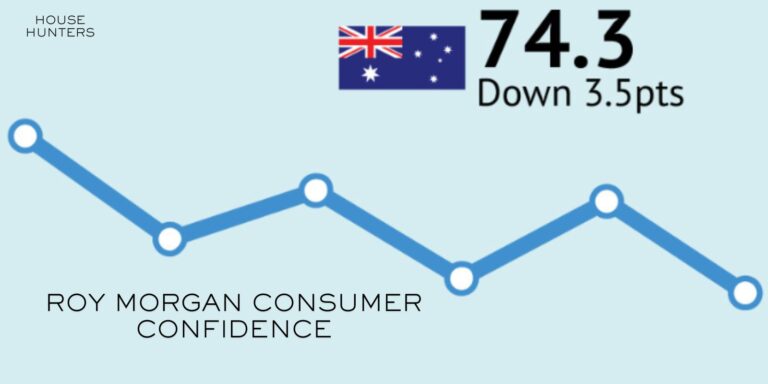
One of the most misunderstood metrics in 2026 is sentiment. Buyer confidence has weakened due to interest rates and global uncertainty, yet transaction activity remains stable.
This gap shows that buyers are cautious—but still active. Decisions are slower and more selective, but demand has not exited the market.
FAQ
What is the most important metric in 2026?
Borrowing capacity is the most influential factor, as it directly determines how much demand exists within each price segment.
Are rising listings improving the market?
Only partially. Listings are increasing, but effective supply remains limited in high-demand segments.
Why are lower-priced suburbs performing better?
Because demand has shifted downward due to reduced borrowing capacity, concentrating competition in those areas.
Are auction results still reliable indicators?
Yes, but they now reflect pricing accuracy more than overall market strength.
Is demand weakening in 2026?
Demand is becoming more selective, but it remains structurally strong across key segments.
Reading the Market Through Data, Not Headlines
The Sydney market in 2026 is not defined by a single trend—it is defined by the interaction of multiple metrics. Prices, supply, demand, and borrowing capacity are no longer moving in sync, which is why surface-level analysis often feels contradictory.
The advantage now lies with those who understand the underlying data. Buyers and sellers who track these metrics are not guessing—they are positioning. In a market that rewards precision, data is no longer supporting decisions—it is driving them.