
Sydney Sellers 2026: Why Pricing Right Is Critical Now
Sydney Sellers in 2026: Why ‘Meet the Market’ Could Be the Advice That Saves Your Sale
Selling property in Sydney in 2026 is no longer about testing the market—it is about aligning with it early. Sydney Sellers in 2026: The shift in buyer behavior over the past 12 months has created a clear divide between properties that sell efficiently and those that stall. Sellers who price based on past peak expectations are facing extended days on market, while those who meet current buyer capacity are securing faster, cleaner transactions.
This change is not driven by weak demand. In fact, sales activity across Sydney is still running strong, with transaction levels up and key suburbs showing increased momentum, according to recent hotspot data. The issue is not demand—it is pricing alignment within a more constrained financial environment.
In 2026, properties don’t fail because of lack of buyers—they fail because they miss the price range where buyers can act.
The Shift in Seller Reality
The Sydney market in 2026 is operating as a two-speed system. Entry-level and mid-range properties—particularly in Western Sydney and key growth corridors—are still moving with strong competition. At the same time, higher-priced or misaligned listings are sitting longer, often requiring price adjustments before attracting serious interest.
This shift is closely tied to borrowing capacity. Buyers who previously operated above $1M are now constrained into lower price brackets, creating concentrated demand. As a result, sellers who price above this compressed demand zone are effectively removing themselves from the active buyer pool.
Insights from current Sydney market trends show that time on market is now directly correlated with pricing accuracy, not property quality alone.
Why Pricing Strategy Now Determines the Outcome
In previous cycles, sellers could afford to test higher price guides and adjust later without significant impact. In 2026, that strategy is backfiring. Properties that launch above market expectations are seeing reduced inspection numbers, weaker early offers, and longer selling timelines.
The reason is behavioural. Buyers are more data-driven and less emotionally reactive, particularly under higher borrowing costs. When a property is perceived as overpriced, it is often filtered out immediately rather than negotiated.
Analysis from buyer market positioning highlights that buyers are willing to act quickly—but only when pricing aligns with their financial limits and comparable sales data.
Meeting the market early does not mean underselling—it means positioning within the active demand range, where competition can actually push the final price upward.
What Buyers Are Actually Doing in 2026
Buyer behaviour has become more selective and financially constrained. While demand remains present, it is no longer broad—it is targeted. Buyers are focusing on properties that meet strict criteria: realistic pricing, functional layouts, and proximity to infrastructure.
Recent reporting shows that even with rising listings, Sydney continues to experience active transaction levels across multiple segments, with diverse price points still achieving sales outcomes. :contentReference[oaicite:1]{index=1} This reinforces that demand has not disappeared—it has become more disciplined.
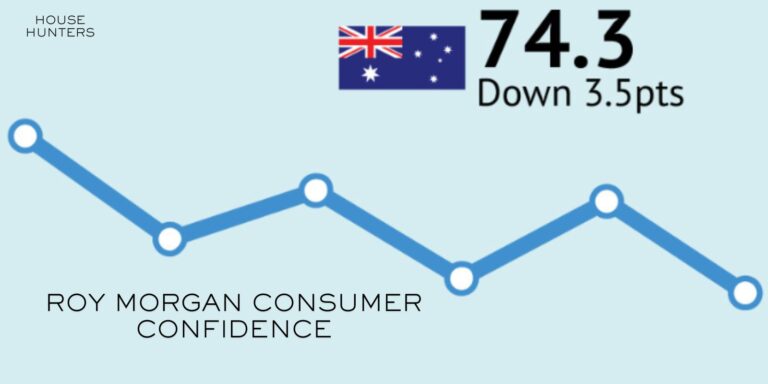
At the same time, external factors such as interest rate pressure and global uncertainty have reduced buyer urgency. As seen in broader market sentiment shifts, including declining clearance rates and softer buyer confidence, sellers can no longer rely on emotional bidding to push prices beyond expectations. :contentReference[oaicite:2]{index=2}
This creates a clear dynamic: buyers are still active, but only within defined financial boundaries.
The Cost of Not Meeting the Market
The biggest risk for sellers in 2026 is not selling below expectations—it is failing to sell at all within an optimal timeframe. Properties that remain on the market too long become stigmatised, leading to reduced buyer interest and weaker negotiating positions.
Delayed price adjustments often result in lower final outcomes compared to pricing correctly from the start. This is because early momentum—strong inspections, multiple buyers, and competitive offers—is lost once a property is perceived as overpriced.
Insights from Sydney buying window analysis show that buyers are actively waiting for value signals, meaning overpriced listings are simply bypassed rather than negotiated.
In this environment, “meeting the market” is not conservative—it is strategic. It ensures the property enters the segment where buyers are actually able to compete.

FAQ – Sydney Sellers in 2026
What does “meet the market” mean in 2026?
It means pricing within the range where current buyers can realistically transact, based on borrowing limits and recent comparable sales—not past peak expectations.
Are overpriced properties still selling in Sydney?
Only after price adjustments. Most overpriced listings are sitting longer and attracting less competition compared to correctly priced properties.
Why is pricing more important than before?
Because buyer borrowing capacity has reduced, making price alignment the key factor that determines whether a property enters the active demand pool.
Do well-priced properties still get multiple offers?
Yes, particularly in mid-range suburbs where demand is concentrated. Competition still exists when pricing is aligned with buyer capacity.
What is the biggest mistake sellers are making in 2026?
Anchoring to past peak prices instead of current market conditions, which leads to longer selling times and weaker final outcomes.
Why Pricing Alignment Is the New Advantage
Sydney’s 2026 market is not rejecting sellers—it is filtering them. Buyers are still present, transactions are still happening, and demand has not disappeared. What has changed is the margin for error. Pricing is no longer flexible—it is decisive.
Sellers who understand this shift are not discounting—they are positioning. By entering the market at the right level, they are creating competition instead of waiting for it. In a market defined by constraints, the advantage no longer goes to the highest price—it goes to the most accurate one.